Gaming has become a large part of society nowadays, with
everyone ranging from young boys to older girls seemingly interacting in gaming
with each other. This “gaming” includes hardcore gamers who play multiplayer
shooters, to casual gamers who play candy crush on Iphones on the way home. It
also provides gamers with almost never ending content in the world as Raessens
describes, computer games can easily be “modified, copied and distributed
without the loss of quality” (2005, p. 374). Video games are now a
form of participatory medial culture.
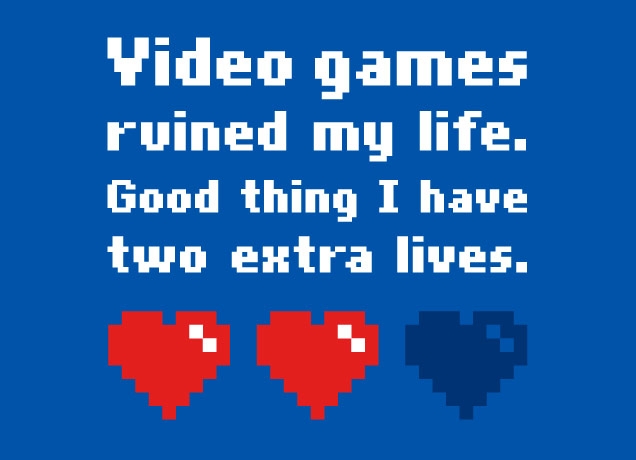
It used to be that gaming was only played by nerdy young
boys and society looked down on video games as ‘uncool’ or ‘childish’. In a
study by Juul Jesper (2012), he stated that video games have been reinvented
sense the year 2000 and now acts as a casual revolution. These days around 45% of gamers are women, and according to the Entertainment Software RatingBoard the average gamer age is now 34 with 49% of gamers in the age
range of 18-49. Video games have come a long way from being look down as ‘uncool’
and now contribute to one of the strongest points in entertainment.
The readings of Joost Raessens give an interesting insight
on gaming and how it has and will continue to affect the media. He stated that
the “young mass audience" (Raessens, 2005) will explore the notion of
multimidality, virtuality, interactivity and connectivity through gaming. A
recent example on how far gaming has effected are culture was success of the
new game GTA V, which took $1 billion income in 3 days,
breaking the all time record for profit in all areas of media. This is one of
many examples of how gaming has impacted our lives, and clearly will
continue to affect the world around us.

Games can also be very important for the development of the human brain. For example, in your everyday life you will be faced with variety of problems which you must overcome. Likewise in computer games, you are faced with a variety of similar issues and are required to solve these problems in a specific time limit. Studies have shown that these video games actually help people deal better with problems in real life by remaining calm and behaving rationally when sudden issues arise (Diana Graf 2009).

I consider myself a casual gamer, someone who plays
video games once in a while (on my phone when on a bus or tram), and I think
many video games are an art and a form of escapism. I use video games to escape
from my problems and they provide me with “a window back into our world.”
(McCloud 2005). While gaming can provide social interaction with other people
and serve as a way to escape reality from time to time, it is important that it
does not serve as a replacement for communication or addiction. While virtual
reality can be fun it is important that it doesn’t make you break away from
reality.
A video game that I think has impacted my life (and most of
my friends) the most is Pokemon. The game (for those who have
been living under a rock for the last 19 years) centres around a child who
lives in a fictional world where you catch and train imaginary animals called ‘pokemon.’
The role playing game allows players to roam freely through the game with the goal
to complete the Pokédex by collecting all of the available Pokémon
species found in the fictional region where that game takes place, and to train
a team of powerful pokemon to eventually become the strongest Trainer i.e. the
Pokémon Master. Funny enough both goals are actually impossible as not every Pokemon
is catchable, and it is nearly impossible to be the best trainer in the world. This
was part of it’s appeal as it was a journey without end, an aspiration that could
never be fully achieved.

When I was growing up Pokemon was the most popular video game, it
spawned countless spinoffs in the form of TV shows, movies, trading cards,
toys.etc. Pokemon was so popular it even connected children from different
cultures. When I was in primary school my class went to Japan to experience a different
culture. I thought it would be impossible for our class to connect to Japanese
people as we were too different, however I couldn’t have been more wrong. While
we did not have much in common we did have one thing, which is Pokemon. My
class not only connected to other children through Pokemon but we also ended up
becoming friends, some who I still connect with on Facebook to this day. Looking
back at that experience, it highlighted the positive side of globalization and cross-cultural
communication.
It is also worth noting the different range of media forms that have
developed in this current media culture, and although I do not see myself as a
hardcore gamer, I do think that I unconsciously follow the range of aspects of
this current culture, where even though I am uninterested in video games at times,
because of the social media I still unintentionally follow what video games are
coming out. Thanks to the current era I interact, develop and express a portion
of my ideas online, and due to globalisation and the internet, the power of
media cultures will only grow stronger every day.

The virtual world of gaming went from being
socially look down on to being the highest grossing means of entertainment. Although
video games are now seen by many as a bad example for kids or just another use of
entertainment, it also has overseen teaching values that help people in everyday
life skills and can serve as way of communication from one culture to another. Every
year the population of video game players seem to grow higher and in my opinion video games is the future of entertainment.
Reference List:
Link 1: http://variety.com/2013/digital/news/who-plays-video-games-more-girls-than-you-may-think-1200569882/
Link 2: http://www.esrb.org/about/video-game-industry-statistics.jsp
Link 3: http://www.businessspectator.com.au/news/2013/9/23/technology/gta-v-sales-speed-past-1-billion-three-days
Link 4: http://en.wikipedia.org/wiki/Pok%C3%A9mon
Image 1:
https://dov5cor25da49.cloudfront.net/products/921/636x460design_01.jpg
Image 2: http://images.thesource.com.s3.amazonaws.com/wp-content/uploads/2013/04/gta-v-details-revealed-rockstar-0.jpg
Image 3: http://gamerfitnation.com/wp-content/uploads/2011/11/Screen-Shot-2011-11-05-at-11.16.32-AM.png
Image 4: http://images6.fanpop.com/image/photos/33100000/Pikachu-Gangnam-Style-pokemon-33193931-1049-1038.jpg
Image 5: http://scienceblog.com/wp-content/uploads/2012/05/video-games-reality.jpg
Raessens, J 2005, ‘Computer games as participatory media culture’, Handbook
of computer game studies 2005, MIT Press, Cambridge, Mass, pp.
373-388
McCloud, S 2005, Scott McCloud: The visual magic of comics, TED.com,
Squire, K. (2011). Video Games and Learning: Teaching and Participatory
Culture in the Digital Age. Technology, Education--Connections (the TEC
Series). Teachers College Press. 1234 Amsterdam Avenue, New York, NY 10027.
Gee, J. P. (2003). What video games have to teach us about learning and
literacy. Computers in Entertainment (CIE), 1(1), 20-20.
Graf, D. L., Pratt, L. V., Hester, C. N., & Short, K. R. (2009).
Playing active video games increases energy expenditure in children.
Pediatrics, 124(2), 534-540.
Juul, J. (2012). A casual revolution: Reinventing video games and their
players. The MIT Press.
